Are you navigating the exciting world of baking and wondering which kitchen essential—a hand mixer or a stand mixer—is the right fit for your culinary adventures? As an experienced technician who has spent over a decade testing and evaluating hundreds of models, I understand the nuances that differentiate these two powerful tools. Choosing between them isn’t just about mixing; it’s about understanding your needs, your kitchen space, and the types of delicious creations you aspire to make. This comprehensive guide will break down everything you need to know, helping you make an informed decision that elevates your baking game.
Hand Mixers: The Portable Powerhouses
Hand mixers are the nimble workhorses of the kitchen, designed for quick, efficient mixing without the footprint of a larger appliance. They are handheld, motorized devices that come with various attachments, typically beaters and sometimes dough hooks or whisks.
What Are Hand Mixers Best For?
Hand mixers excel at lighter tasks and smaller batches. Think about whipping up fluffy egg whites for a meringue, creating a perfectly aerated whipped cream topping for dessert, or quickly incorporating ingredients for a simple cake batter. Their portability means you can mix directly in any bowl, reducing cleanup and offering flexibility in your workspace. They are an indispensable tool for everyday baking and cooking.
Pros and Cons of Hand Mixers:
- Pros:
- Portability: Lightweight and easy to move around.
- Affordability: Generally much less expensive than stand mixers.
- Storage: Compact, fitting easily into drawers or small cabinets.
- Quick Cleanup: Beaters are usually dishwasher- safe, and the unit is easy to wipe down.
- Ideal for Light Tasks: Excellent for whipping, beating, and combining wet and dry ingredients.
- Cons:
- Less Powerful: Struggle with heavy doughs or very thick batters.
- Not Hands-Free: Requires constant holding and maneuvering, which can tire your arm.
- Limited Capacity: Best for small to medium batches.
- Fewer Attachments: Typically comes with basic beaters and dough hooks, less versatile than stand mixers.
When selecting a hand mixer, look for models with a comfortable ergonomic grip, multiple speed settings (including a slow start to prevent splatters), and a decent wattage (around 200-300W is usually sufficient for most tasks). Brands like Cuisinart, Breville, and Philips often offer reliable options that balance power with user-friendliness.
Stand Mixers: The Kitchen Workhorses
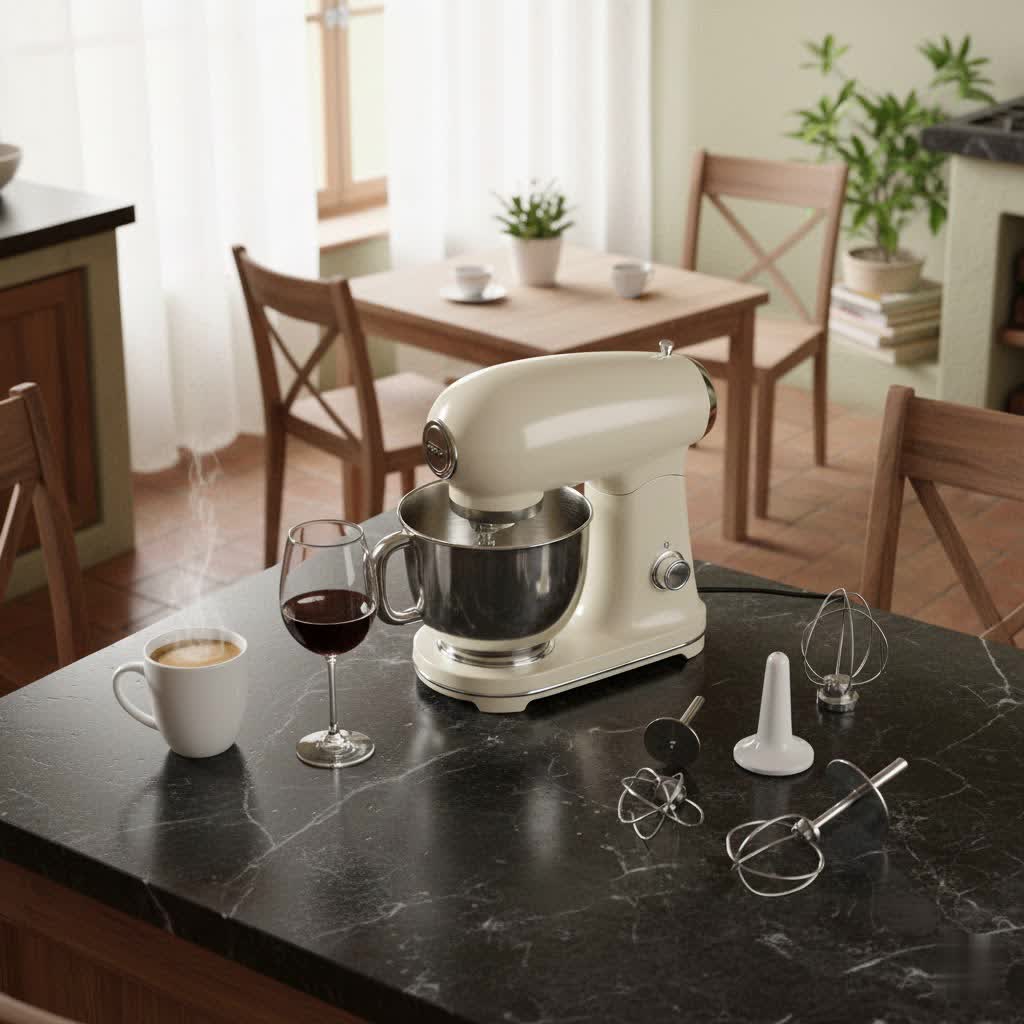
Stand mixers are robust countertop appliances built for power, capacity, and hands-free operation. They feature a heavy base, a powerful motor, and a mixing bowl that locks into place. Most modern stand mixers use “planetary mixing action,” where the attachment rotates in one direction while the head spins in the opposite direction, ensuring thorough and even mixing throughout the bowl.
What Are Stand Mixers Best For?
Stand mixers are the ultimate tool for serious bakers and those who frequently tackle demanding recipes. They are perfect for kneading dense bread doughs, mixing large batches of cookie batter, mashing potatoes, or making stiff meringues for extended periods without tiring your arms. Their power and stability mean they can handle heavy loads with ease, consistently delivering professional results.
Pros and Cons of Stand Mixers:
- Pros:
- Hands-Free Operation: Allows you to multitask while mixing.
- Greater Power & Capacity: Handles heavy doughs, large batches, and dense batters effortlessly.
- Stability: Heavy design prevents movement during operation.
- Versatility: Comes with a wide range of attachments (beaters, whisks, dough hooks) and often has power hubs for additional accessories like pasta makers, meat grinders, and juicers.
- Durability: Built to last, often seen as a long-term investment.
- Cons:
- Expensive: Significantly higher upfront cost.
- Takes Up Space: Large and heavy, requiring dedicated counter space or significant storage.
- Not Portable: Designed to stay in one place.
- Can Be Overkill for Simple Tasks: Not always necessary for very light or small mixing jobs.
When considering a stand mixer, important features include motor wattage (higher is better for doughs), bowl capacity (often 4.5 to 7 quarts), and whether it has a tilt-head or bowl-lift design. KitchenAid is a dominant brand, renowned for its iconic design, durability, and extensive range of attachments, though Bosch and Breville also offer excellent models.
Hand Mixer vs. Stand Mixer: A Head-to-Head Comparison
To help you visualize the differences, here’s a quick comparison:
| Feature | Hand Mixer | Stand Mixer |
|---|---|---|
| Power | Moderate, best for lighter tasks (200-300W) | High, handles heavy tasks with ease (300W-1000W+) |
| Capacity | Small to medium batches, mixes in any bowl | Large batches, dedicated bowl (4.5-7+ quarts) |
| Portability | Highly portable, lightweight | Stationary, heavy |
| Price | Affordable ($20 – $100) | Significant investment ($200 – $600+) |
| Typical Uses | Whipping cream, egg whites, light batters, sauces | Kneading dough, dense batters, large batches, mashing |
| Key Advantage | Convenience, portability, quick prep/cleanup | Hands-free operation, power, versatility, stability |
| Key Disadvantage | Less powerful, not hands-free, limited versatility | Cost, size, weight, takes up counter space |
Choosing Your Perfect Mixer: What to Consider
Deciding between a hand mixer and a stand mixer boils down to several key factors tailored to your unique kitchen and baking lifestyle. There’s no single “best” option; only the best option for you.
- Your Baking Habits: How often do you bake? If you’re an occasional baker who enjoys simple cakes, cookies, and whipped cream, a hand mixer might be all you need. For frequent bakers, especially those who experiment with breads, pastries, and large batches, a stand mixer is a game-changer.
- Types of Recipes: Do your recipes mostly involve light batters and whipping, or do you frequently tackle stiff doughs and dense mixtures? Hand mixers shine with the former, while stand mixers effortlessly conquer the latter.
- Kitchen Space: Evaluate your kitchen’s real estate. A hand mixer can be tucked away in a drawer, while a stand mixer demands a dedicated spot on your countertop or a sturdy pantry shelf.
- Budget: Your financial investment is a significant consideration. Hand mixers are budget-friendly, making them an accessible entry point into the world of electric mixing. Stand mixers are a more substantial investment, but their durability and versatility often justify the cost over time.
- Versatility Needs: Do you envision using your mixer for more than just baking? If you dream of making homemade pasta, grinding your own meat, or stuffing sausages, a stand mixer with its power hub for attachments offers unparalleled versatility.
Top Brands in the Mixer Market
The mixer market boasts several reputable brands, each with its strengths:
- KitchenAid: Synonymous with stand mixers, offering iconic designs, robust build quality, and an extensive range of attachments. Their tilt-head and bowl-lift models are industry standards.
- Bosch: Known for powerful stand mixers, particularly popular for bread making due to their strong motors and efficient mixing.
- Cuisinart: Offers a solid range of both Hand And Stand Mixers, often praised for reliability and good value. Their hand mixers are consistently rated highly for performance.
- Breville: Provides innovative and high-performance kitchen appliances, including hand and stand mixers that often feature smart designs and powerful motors.
- Philips: A strong contender in the hand mixer category, offering user-friendly models with good ergonomics and reliable performance for everyday tasks.
Can a Hand Mixer Replace a Stand Mixer (or Vice Versa)?
This is a common question, and the simple answer is: not completely. While there’s some overlap in their basic functions, each mixer type has distinct capabilities and limitations.
A hand mixer can handle many tasks that a stand mixer can, especially lighter ones. You can whip cream, beat eggs, and mix cake batters. However, trying to knead a heavy bread dough with a hand mixer is not only inefficient but can also strain the motor and your arm. It’s often impractical for large batches and prolonged mixing.
Conversely, a stand mixer can perform light tasks, but it might be overkill for a quick whisk of two eggs or a small amount of whipped cream. Its size and setup time can make it less convenient for very minor jobs.
For ultimate kitchen flexibility, many avid bakers opt to own both. A hand mixer for quick, small jobs and a stand mixer for heavy-duty, hands-free tasks provides the best of both worlds, ensuring you always have the right tool for the job.
Tips for Using and Maintaining Your Mixer
Proper use and maintenance will extend the life of your mixer and ensure optimal performance:
- Read the Manual: Always familiarize yourself with your specific model’s instructions and safety guidelines.
- Start Slow: Begin mixing at the lowest speed to prevent ingredients from splattering, then gradually increase as needed.
- Use the Right Attachment: Ensure you’re using the correct attachment (beater, whisk, dough hook) for the task at hand.
- Don’t Overload: Respect your mixer’s capacity. Overloading a hand mixer can burn out the motor, while overloading a stand mixer can cause unnecessary strain.
- Clean Immediately: Wash attachments promptly after use. For the main unit, wipe it down with a damp cloth; never submerge it in water.
- Proper Storage: Store hand mixers in a dry place where they are easily accessible. For stand mixers, keep them on a sturdy countertop or a shelf where they won’t be easily knocked over.
- Listen to Your Mixer: If your mixer sounds strained or is getting unusually hot, stop and check for overfilling or incorrect usage.
Conclusion
Choosing between a hand mixer and a stand mixer doesn’t have to be a daunting task. By evaluating your baking frequency, the types of recipes you love to make, your kitchen space, and your budget, you can confidently select the perfect kitchen companion. While hand mixers offer unmatched portability and convenience for everyday tasks, stand mixers provide unparalleled power, capacity, and versatility for more ambitious culinary projects. Both are invaluable tools, each bringing unique strengths to your kitchen. So, whether you opt for the agile hand mixer or the mighty stand mixer, you’re one step closer to whipping up your next delicious creation with ease.
Which mixer will power your next culinary masterpiece?
Frequently Asked Questions
Is a stand mixer worth it for a casual baker?
|
Our Picks for the Best Hand Mixer in 2026
As an Amazon Associate I earn from qualifying purchases.
|
||
| Num | Product | Action |
|---|---|---|
| 1 | KitchenAid 5-Speed Ultra Power Hand Mixer - KHM512, Contour Silver |

|
| 2 | Hamilton Beach 6-Speed Electric Hand Mixer with Whisk, Dough Hooks and Easy Clean Beaters, Powerful 275 Watt Motor, Snap-On Storage Case, White |
|
| 3 | Mity Rain 4-in-1 Frother for Protein Powder, Adjustable-Waterproof, Protein Powder Scoop Funnel Set, Detachable Rechargeable Protein Mixer Wand for Coffee, Matcha, Milk, and Drinks |
|
| 4 | KitchenAid 5 Ultra Power Speed Hand Mixer - KHM512, Aqua Sky |
|
| 5 | Hamilton Beach 6-Speed Electric Hand Mixer with Whisk, Dough Hooks and Easy Clean Beaters, Powerful 275 Watt Motor, Snap-On Storage Case, Blue |
|
| 6 | 5-Speed Electric Hand Mixer, 800W Handheld Mixer with Turbo for Baking & Cooking, Kitchen Food Mixer with Storage Case & 5 Stainless Steel Attachments (2 Beaters, 2 Dough Hooks, 2 Whisks)-White |
|
| 7 | Hamilton Beach 6-Speed Electric Hand Mixer with Whisk, Dough Hooks and Easy Clean Beaters, Powerful 275 Watt Motor, Snap-On Storage Case, Black |
|
| 8 | Hamilton Beach 6-Speed Electric Hand Mixer with Whisk, Traditional Beaters, Snap-On Storage Case, 250 Watts, White |
|
| 9 | KitchenAid 5-Speed Ultra Power Hand Mixer |
|
| 10 | KitchenAid 5 Ultra Power Speed Hand Mixer - KHM512, Empire Red |
|
For casual bakers, a hand mixer often suffices for most needs. However, if you aspire to tackle more complex recipes like bread doughs or large batches, or if you simply appreciate the hands-free convenience, a stand mixer is a worthwhile investment that can grow with your baking skills.
What is planetary mixing action?
Planetary mixing action is a feature in most stand mixers where the attachment rotates in one direction while the head of the mixer rotates in the opposite direction. This unique movement ensures that ingredients are thoroughly incorporated from all sides of the bowl, leaving no dry spots or unmixed batter.
Can I knead dough with a hand mixer?
While some hand mixers come with dough hooks, they are generally only suitable for very light doughs or small batches. For heavy, sticky bread doughs that require significant kneading, a stand mixer with a powerful motor and robust dough hook is far more effective and less strenuous.
How do I clean mixer attachments?
Most mixer attachments, such as beaters, whisks, and dough hooks, are dishwasher safe, making cleanup simple. Always check your product manual for specific cleaning instructions. For the mixer unit itself, a quick wipe down with a damp cloth is usually sufficient, ensuring you never submerge the electrical components in water.
