For many home bakers, the hand mixer is a versatile kitchen workhorse, effortlessly whipping cream and blending batters. Yet, lurking in the accessory drawer, often unused, are the enigmatic dough hooks. These curved attachments promise to transform your humble hand mixer into a kneading assistant, but do they truly deliver? The common perception oscillates between a marketing gimmick and a legitimate tool. This article aims to demystify hand mixer dough hooks, exploring their capabilities, limitations, and how to best utilize them for your baking endeavors.
What Are Dough Hooks and How Do They Work?
|
Our Picks for the Best Hand Mixer in 2026
As an Amazon Associate I earn from qualifying purchases.
|
||
| Num | Product | Action |
|---|---|---|
| 1 | Hamilton Beach 6-Speed Electric Hand Mixer with Whisk, Dough Hooks and Easy Clean Beaters, Powerful 275 Watt Motor, Snap-On Storage Case, White |

|
| 2 | Hamilton Beach 6-Speed Electric Hand Mixer with Whisk, Dough Hooks and Easy Clean Beaters, Powerful 275 Watt Motor, Snap-On Storage Case, Black |
|
| 3 | Hamilton Beach 6-Speed Electric Hand Mixer with Whisk, Traditional Beaters, Snap-On Storage Case, 250 Watts, White |
|
| 4 | Hamilton Beach 6-Speed Electric Hand Mixer with Whisk, Dough Hooks and Easy Clean Beaters, Powerful 275 Watt Motor, Snap-On Storage Case, Blue |
|
| 5 | KitchenAid 5 Ultra Power Speed Hand Mixer - KHM512, Empire Red |
|
| 6 | KitchenAid 5-Speed Ultra Power Hand Mixer - KHM512, Contour Silver |
|
| 7 | KitchenAid 5-Speed Ultra Power Hand Mixer |
|
| 8 | KitchenAid 5 Ultra Power Speed Hand Mixer - KHM512, Aqua Sky |
|
| 9 | Mity Rain 4-in-1 Frother for Protein Powder, Adjustable-Waterproof, Protein Powder Scoop Funnel Set, Detachable Rechargeable Protein Mixer Wand for Coffee, Matcha, Milk, and Drinks |
|
| 10 | 5-Speed Electric Hand Mixer, 800W Handheld Mixer with Turbo for Baking & Cooking, Kitchen Food Mixer with Storage Case & 5 Stainless Steel Attachments (2 Beaters, 2 Dough Hooks, 2 Whisks)-White |
|
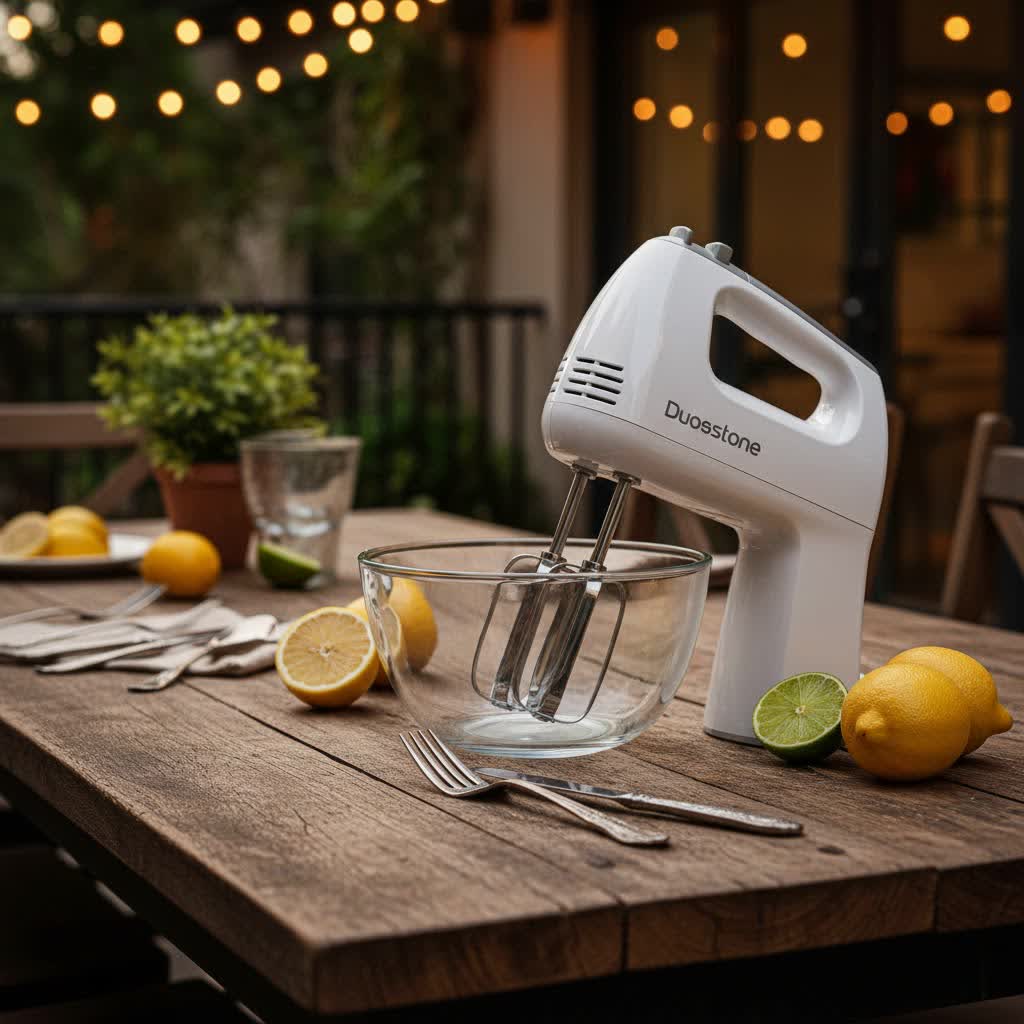
Dough hooks are specialized attachments for mixers, typically C-shaped or spiral, designed to mimic the action of hand-kneading. Their primary function is to develop gluten in yeast-based doughs. As the hooks rotate, they stretch and fold the dough against the sides of the bowl, gradually building the gluten network that gives bread its structure and elasticity. While stand mixers often feature robust, single spiral hooks, hand mixers usually come with a pair of smaller C-shaped hooks that work in tandem to pull and push the dough.
Hand Mixers and Dough Hooks: A Reality Check
The effectiveness of dough hooks on a hand mixer is a frequently debated topic among bakers. It’s crucial to set realistic expectations. Unlike powerful stand mixers with heavy-duty motors designed for sustained kneading, most hand mixers have less robust motors. This means they are often not suited for tackling large quantities or very stiff, low-hydration bread doughs. Attempting to force a hand mixer through dense dough can strain its motor, leading to overheating or even permanent damage.
However, labeling dough hooks as a mere “gimmick” would be an oversimplification. For certain types of dough and in specific scenarios, they can be surprisingly effective and a valuable time-saver compared to laborious hand kneading. The key lies in understanding your mixer’s capabilities and the nature of the dough you’re working with.
Types of Dough Hand Mixer Dough Hooks Can Handle (And What They Can’t)
The success of using dough hooks largely depends on the dough’s hydration and consistency.
Best Suited For:
- High-Hydration Doughs: Doughs with a higher water content, such as ciabatta, focaccia, or many pizza doughs, are typically softer and stickier, making them easier for a hand mixer to manage. The hooks can effectively incorporate ingredients and begin gluten development without excessive strain.
- Soft Yeast Doughs: Recipes for dinner rolls, soft pretzels, or brioche often call for softer doughs that can be kneaded with a hand mixer, especially for smaller batches.
- Initial Mixing of Stiffer Doughs: For heartier bread doughs that ultimately require extensive hand kneading or a stand mixer, dough hooks on a hand mixer can be used for the initial mixing phase to bring the ingredients together and start forming the dough ball, reducing the initial effort of hand mixing.
- Cookie Dough (Light Mixing): While traditional beaters are usually preferred for cookie dough, dough hooks can assist in mixing flour into very thick cookie doughs, particularly before adding solid mix-ins.
Avoid For:
- Very Stiff, Low-Hydration Bread Doughs: Dense, dry bread doughs (like some bagel or rye bread recipes) demand significant power and prolonged kneading, which can quickly overwhelm a hand mixer’s motor.
- Large Batches: Overloading the bowl with a large quantity of dough puts immense stress on the mixer and its hooks, leading to inefficient kneading and potential damage.
- Very Dense Cookie Doughs: While some light mixing is acceptable, exceedingly thick or chilled cookie dough can be too much for hand mixer dough hooks.
Step-by-Step Guide to Using Dough Hooks on Your Hand Mixer
Using dough hooks effectively requires a bit of technique to ensure both your dough and your mixer are happy.
- Preparation: Gather all your ingredients and a sturdy mixing bowl. Ensure your hand mixer is plugged into an accessible outlet.
- Attach Hooks: Insert the dough hooks securely into your hand mixer according to the manufacturer’s instructions. Some hooks are designed to fit one way, so ensure they click into place.
- Combine Wet and Dry Ingredients: Start by hand-mixing your dry ingredients (flour, yeast, salt) in the bowl, then add your wet ingredients. Stir briefly with a spoon to form a shaggy dough, preventing flour from flying when you start the mixer.
- Start on Low Speed: Begin mixing on the lowest speed setting. This helps to gradually incorporate the ingredients and prevents the dough from climbing up the hooks or splashing out of the bowl.
- Gradually Increase Speed: Once the ingredients are mostly combined and a rough dough forms, you can slowly increase the speed to a medium-low setting (typically speed 2 on most mixers).
- Kneading Technique: Move the hand mixer around the bowl in a circular motion, ensuring the hooks reach all parts of the dough. The dough should start to come together, sticking less to the sides of the bowl as gluten develops. Periodically stop the mixer to scrape down any dough clinging to the sides of the bowl.
- Monitor Your Mixer: Pay close attention to your hand mixer. If the motor sounds strained, the mixer becomes excessively hot, or it struggles to move the dough, stop immediately. Give your mixer a break, or consider finishing the kneading by hand.
- Check for Readiness: Knead for 3-5 minutes, depending on the dough. The dough is ready when it looks smoother, feels elastic, and passes the “windowpane test” (stretching a small piece thin enough to see light through without tearing).
Safety Precautions:
- Never overload your mixer.
- Allow the mixer to rest if it feels hot.
- Keep hands and utensils away from moving hooks.
Hand Mixer Dough Hooks vs. Stand Mixer Dough Hooks: A Comparison
Choosing between a hand mixer and a stand mixer for kneading comes down to power, capacity, and convenience.
| Feature | Hand Mixer Dough Hooks | Stand Mixer Dough Hooks |
|---|---|---|
| Power & Efficiency | Lower wattage, struggles with dense/large doughs. | Higher wattage, designed for heavy-duty, consistent kneading. |
| Capacity | Best for small to medium batches of lighter doughs. | Can handle large batches and very stiff doughs. |
| Stability | Requires user to hold the mixer, can be physically tiring. | Freestanding, hands-free operation. |
| Cost | Generally more affordable. | Significant upfront investment. |
| Storage | Compact and easy to store. | Larger footprint, requires dedicated counter or cabinet space. |
| Best Use Cases | Occasional light doughs, smaller recipes, initial mixing. | Frequent baking, large batches, heavy bread doughs, complex recipes. |
“While hand mixers offer portability and affordability, a stand mixer is an investment for serious bakers who frequently tackle yeasted doughs. The difference in motor power and stability is undeniable.”
Choosing a Hand Mixer with Effective Dough Hooks
If you plan to utilize dough hooks frequently, consider these factors when selecting a hand mixer:
- Wattage: Opt for a hand mixer with at least 300-400 watts. Higher wattage generally indicates a more powerful motor that can handle thicker doughs with less strain.
- Speed Settings: A good range of speeds, especially a very low “start” speed, allows for better control over the kneading process.
- Build Quality: Look for models with sturdy, well-constructed dough hooks and a durable motor housing. Some modern mixers boast features like “Beater IQ” technology, which intelligently adjusts speed based on the attachment.
- Brand Reputation: Brands like Breville, Braun, Bosch, and KitchenAid are often cited for producing hand mixers that perform well with dough hooks, though individual model performance can vary.
- Comfort and Ergonomics: Since you’ll be holding the mixer, a comfortable grip and balanced design are essential to minimize fatigue.
Tips for Maximizing Your Hand Mixer’s Dough Hook Performance
To get the most out of your hand mixer’s dough hooks and prolong your appliance’s life:
- Don’t Overwork the Motor: If your mixer sounds strained or gets hot, stop and let it cool. It’s better to knead for shorter bursts with breaks than to push it continuously.
- Adjust Dough Hydration: For very stiff recipes, consider slightly increasing the liquid content (just a tablespoon or two at a time) to make the dough more manageable for the mixer.
- Work in Small Batches: Stick to recipes that yield smaller amounts of dough. Doubling a recipe, for instance, might be too much for a hand mixer.
- Combine Methods: Don’t be afraid to start with the mixer and finish kneading by hand. This hybrid approach leverages the best of both worlds, saving your arms from the initial heavy lifting.
- Proper Cleaning and Maintenance: Always clean your dough hooks immediately after use. Refer to your manual for specific care instructions to ensure longevity.
Conclusion
Dough hooks on a hand mixer are not a universal solution for all kneading tasks, but they are far from useless. For home bakers with limited space or budget who occasionally bake softer, higher-hydration yeast doughs, these attachments can be a convenient and effective aid. Understanding their limitations and employing proper techniques will help you achieve good results without overtaxing your appliance. While they won’t replace a dedicated stand mixer for heavy-duty bread making, hand mixer dough hooks can certainly expand your baking repertoire. So, next time you pull out your hand mixer, don’t overlook those curved companions; they might just be the secret to your next delicious homemade pizza crust or batch of cinnamon rolls.
What will you bake next with your newly empowered hand mixer?
Frequently Asked Questions
Can a hand mixer really knead bread dough effectively?
Yes, a hand mixer with dough hooks can effectively knead some bread doughs, particularly those with higher hydration (softer, stickier doughs) and in smaller batches. It’s generally not suitable for very stiff, low-hydration, or large quantities of dough, as this can strain or damage the motor.
What kind of dough can I make with hand mixer dough hooks?
Hand mixer dough hooks are best for soft yeast doughs like pizza dough, ciabatta, focaccia, soft rolls, or brioche. They can also assist with the initial mixing of slightly stiffer doughs or incorporating flour into thick cookie dough.
How long can I use dough hooks on a hand mixer?
It’s recommended to use dough hooks on a hand mixer for shorter periods, typically 3-5 minutes at a time. Pay close attention to your mixer’s motor; if it sounds strained or gets hot, stop and let it cool to prevent overheating and damage.
Is it worth buying a hand mixer with dough hooks?
If you’re an occasional baker who enjoys making lighter yeast doughs in small batches and wants to avoid manual kneading, a hand mixer with dough hooks can be a worthwhile, budget-friendly investment. For frequent, heavy-duty bread making, a stand mixer is a more robust and effective tool.
